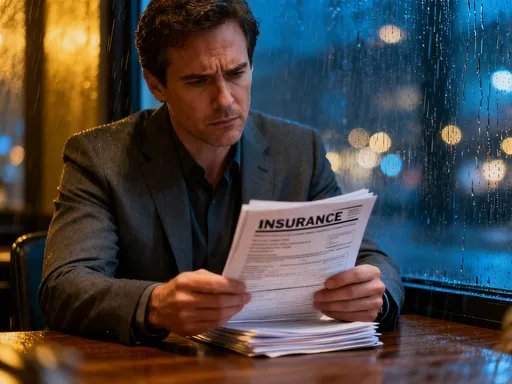
How I Survived a Business Crash — My Risk Check That Saved Everything
I once poured everything into a startup that collapsed in months. The fallout hit hard — savings gone, stress through the roof. But that failure taught me something no business school ever did: real risk assessment isn’t about spreadsheets, it’s about survival. I’ve tested methods, made brutal mistakes, and finally built a system that works. This is how I rebuilt — and how you can protect yourself before disaster strikes.
The Day Everything Fell Apart
It started with a single phone call on a Tuesday morning. A client I had counted on for nearly half my revenue said they were pulling out — not next quarter, not next month, but immediately. I hung up, heart pounding, and checked my bank account online. The balance confirmed my fear: we were already operating in the red. Within 48 hours, two more clients followed suit. The domino effect was swift and merciless. I remember sitting at my kitchen table, staring at a stack of unpaid invoices, realizing that the business I had spent two years building was unraveling faster than I could respond.
That week felt like a slow-motion collapse. Emails went unanswered. Suppliers called demanding overdue payments. My sleep vanished, replaced by endless loops of worry and regret. I had believed in the vision too much — so much that I ignored warning signs that now seemed obvious. I had no emergency fund, no backup clients, and no clear sense of how much money we were actually burning each month. The dream I had poured my savings, time, and energy into had become a financial trap.
What made it worse was the silence. I didn’t know who to talk to. I felt ashamed, as if failure was a personal flaw rather than a common business reality. But in the months that followed, I began to see the truth: my story wasn’t unique. According to the U.S. Bureau of Labor Statistics, about 20% of small businesses fail within the first year, and nearly half don’t make it past the five-year mark. Failure isn’t rare — it’s built into the system. The difference between those who recover and those who don’t often comes down to one thing: whether they had a way to see the danger coming.
This experience changed how I think about money, planning, and control. I had focused so much on growth and opportunity that I neglected the foundation — risk awareness. I learned the hard way that passion alone won’t keep a business alive. What matters is the ability to anticipate, adapt, and act before the crisis hits. That lesson became the seed of a new approach — one that didn’t just help me survive, but eventually thrive again.
Why Risk Assessment Isn’t Just for Experts
Many people think of risk assessment as something reserved for corporate boardrooms or Wall Street analysts with complex models and expensive software. But in reality, assessing risk is something we all do every day, often without realizing it. When you check the weather before planning a family picnic, you’re assessing risk. When you fasten your seatbelt before driving, you’re preparing for the unexpected. These small, routine actions are forms of risk management — and the same logic applies to business and personal finance.
Risk assessment isn’t about predicting the future with perfect accuracy. It’s about increasing your odds of making sound decisions by identifying potential threats early. In business, this means asking simple but powerful questions: What could go wrong? How likely is it? And if it does happen, can I handle it? These aren’t abstract concerns — they’re practical tools that help you avoid being caught off guard.
One of the biggest misconceptions is that risk means danger to be avoided at all costs. But in reality, every worthwhile opportunity carries some level of risk. The key is not elimination, but navigation. Just as a skilled driver doesn’t avoid highways because of the risk of accidents, a smart business owner doesn’t avoid growth because of potential setbacks. Instead, they prepare — they stay alert, maintain control, and have a plan for when conditions change.
For someone running a small business or managing household finances, formal training isn’t necessary to practice effective risk assessment. What matters is consistency and honesty. It requires looking at your situation with clear eyes, not wishful thinking. It means admitting when you’re overly dependent on one source of income or when your expenses are creeping too close to your limits. This kind of awareness doesn’t require a degree — it requires discipline and a willingness to face uncomfortable truths.
Over time, I realized that treating risk as a regular part of decision-making — not a crisis response — transformed my entire approach. It shifted me from a mindset of reaction to one of readiness. And that shift didn’t come from complicated formulas or expensive consultants. It came from adopting a simple, repeatable habit of asking the right questions before making commitments. That’s the foundation of real financial resilience.
The Blind Spots That Destroy Businesses
Looking back, the collapse of my business wasn’t caused by a single mistake. It was the result of multiple blind spots — problems I didn’t see, didn’t prioritize, or convinced myself weren’t serious. These weren’t hidden or complex issues. They were obvious in hindsight, but invisible at the time because I was focused on growth and momentum. The most dangerous risks are often the ones we normalize, the ones we tell ourselves “won’t happen to us.”
One of the biggest blind spots was customer concentration. Nearly 60% of my revenue came from three clients. That felt stable — until it didn’t. When the first one left, the impact was severe. When the second followed, the business lost its ability to cover basic expenses. I had never seriously considered what would happen if even one of them reduced their engagement. I assumed loyalty would protect us. But loyalty doesn’t pay bills. Diversification does.
Another critical oversight was cash flow tracking. I knew roughly how much money was coming in and going out, but I didn’t have a real-time view of our burn rate — how fast we were spending cash relative to income. I treated revenue as profit, which led to overspending on tools, marketing, and staffing. What I didn’t realize was that revenue without timing alignment creates a false sense of security. You can be busy and broke at the same time.
Market shifts were another blind spot. I was so focused on delivering for existing clients that I stopped paying attention to changes in customer behavior and industry trends. A new competitor emerged with a lower-cost model, and I didn’t respond quickly enough. By the time I noticed, several clients had already switched. I had assumed my service was irreplaceable — a dangerous assumption in any market.
These blind spots weren’t unique to me. Studies show that small businesses often fail due to a combination of over-optimism, lack of financial monitoring, and failure to adapt. The problem isn’t that people don’t work hard — it’s that they don’t build systems to catch mistakes before they become disasters. Risk isn’t always external. Often, it’s built into the way we operate — in our habits, assumptions, and routines. The first step to fixing it is simply seeing it for what it is.
Building Your Early Warning System
After my business failed, I knew I couldn’t rely on instinct or hope again. I needed a system — something simple, repeatable, and hard to ignore. So I created a monthly risk check, a short list of key indicators I now review without fail. It’s not a complex audit. It’s a practical habit that takes less than an hour but has prevented multiple potential crises in my current ventures.
The first part of my check focuses on customer concentration. I calculate what percentage of my income comes from my top three clients. If any single client accounts for more than 25%, I set a goal to diversify. If the top three together exceed 60%, I treat it as a red flag and take action — reaching out to past clients, launching small marketing efforts, or exploring new service lines. This isn’t about cutting ties — it’s about reducing dependency.
The second element is burn rate monitoring. I track how much cash I’m spending each month versus how much I’m bringing in. More importantly, I calculate how many months of runway I have left based on current savings. If that number drops below six, I trigger a cost review. This forces me to ask: What expenses can be delayed or reduced? Are there services I’m paying for but not using? This simple metric has saved me from overextending more than once.
I also track market signals. This includes customer feedback, competitor moves, and industry news. I spend 30 minutes each month reviewing trends and asking whether my offering still meets current needs. This habit keeps me from becoming complacent. It’s easy to assume your product is timeless, but markets evolve — and businesses that don’t adapt get left behind.
The final part of my check is personal capacity. Burnout is a real risk, especially for solo entrepreneurs or small teams. If I’m consistently working more than 50 hours a week or feeling overwhelmed, I treat it as a warning sign. High stress impairs judgment, and poor decisions increase financial risk. So I build in rest, delegate when possible, and avoid taking on new projects during high-pressure periods.
This system works because it’s simple and consistent. I schedule it on my calendar like a doctor’s appointment — non-negotiable. Over time, it’s become second nature. The goal isn’t perfection — it’s awareness. By catching small problems early, I’ve avoided major setbacks. And that’s the power of a real early warning system: it doesn’t prevent all risks, but it gives you time to respond.
Stress-Testing Your Business Like a Pro
Once I had my early warning system in place, I wanted to go further. I needed to know how my business would hold up under pressure. So I started running financial stress tests — simple simulations of worst-case scenarios. These aren’t predictions, and they’re not meant to scare you. They’re tools to reveal weaknesses before they cause damage.
I begin by asking a basic question: What if my revenue dropped by 30% overnight? This isn’t an unlikely scenario — it happens to businesses every day due to client loss, market changes, or economic downturns. I map out how long I could survive at that lower income level based on current savings and expenses. If the answer is less than three months, I know I need to strengthen my financial buffer.
Another test I run is the supplier shock scenario. What if my main vendor doubled their prices or went out of business? I identify alternatives in advance and estimate the cost and transition time. This doesn’t mean I switch immediately — it means I’m prepared if I have to. The same goes for key team members. What if my main contractor became unavailable? Do I have backup options? These aren’t signs of distrust — they’re signs of planning.
I also test for timing risks. Cash flow problems often come from delays — a client paying late, a project taking longer than expected. So I simulate a 60-day delay in payments from my largest client. How would that affect my ability to pay bills? Could I cover payroll? This exercise has led me to negotiate better payment terms, request deposits, and build stronger client communication habits.
The key to effective stress testing is simplicity. You don’t need advanced software or financial models. A spreadsheet and honest assumptions are enough. The goal is to ask “what if” questions and follow them to their logical conclusions. This process doesn’t eliminate uncertainty — nothing can. But it builds resilience by revealing where you’re vulnerable and giving you time to prepare.
Over time, these tests have changed how I make decisions. Before launching a new project, I run a quick stress scenario. Before signing a new client, I consider what would happen if they left. This mindset isn’t about fear — it’s about freedom. When you know you can handle setbacks, you’re more willing to take smart risks. And that’s where real growth happens.
The Hidden Power of Exit Triggers
Most business advice focuses on persistence — on pushing through challenges no matter what. But I’ve learned that knowing when to stop is just as important as knowing how to start. That’s why I now use exit triggers: pre-defined conditions that tell me when it’s time to walk away from a project, client, or even an entire business model.
An exit trigger isn’t a sign of failure. It’s a form of risk control. For example, I set a rule that if a project consistently fails to meet its milestones for three months, I reevaluate — even if I’m emotionally invested. Another trigger is cash reserves: if my savings fall below three months of living expenses, I pause all non-essential spending and focus on stabilizing income. These aren’t arbitrary limits — they’re boundaries designed to protect my financial health.
One of the most powerful exit triggers I use is client toxicity. If a client repeatedly disrespects deadlines, refuses to pay on time, or creates constant stress, I allow myself to let them go — even if they represent significant revenue. I learned the hard way that some income isn’t worth the cost to my well-being. Financial health includes mental and emotional stability, not just bank balances.
Exit triggers work because they remove emotion from high-pressure decisions. When you’re in the middle of a crisis, it’s hard to think clearly. But if you’ve already decided in advance what you’ll do when certain conditions are met, the choice becomes automatic. It’s like setting a fire alarm — when it goes off, you don’t debate whether to leave the building. You act.
This approach has saved me from prolonged losses and unnecessary stress. It’s allowed me to pivot quickly, redirect energy to better opportunities, and maintain control over my financial life. Quitting isn’t always surrender — sometimes, it’s the smartest move you can make. And when it’s based on a clear, pre-planned rule, it’s not failure. It’s strategy.
Rebuilding Smarter: Risk as a Foundation
Today, my relationship with risk is completely different. I no longer see it as a threat to be feared, but as a necessary part of building something lasting. The failure of my first business was painful, but it gave me a gift: clarity. I now integrate risk assessment into every decision — from launching a new service to managing household expenses. It’s not about avoiding risk, but about understanding it deeply enough to move forward with confidence.
My current business is smaller than my first, but it’s more resilient. I have multiple income streams, a healthy cash reserve, and systems in place to catch problems early. I still take risks — but they’re calculated, not reckless. I’ve learned that true financial freedom doesn’t come from chasing big wins. It comes from building a foundation that can withstand setbacks.
This mindset has spilled over into my personal life. I review insurance policies regularly, maintain an emergency fund, and discuss financial goals openly with my family. I’ve taught my children the value of saving and planning, not because I want them to fear money, but because I want them to respect it. Financial literacy isn’t just about numbers — it’s about responsibility and peace of mind.
Resilience isn’t something you’re born with. It’s something you build, one decision at a time. My journey taught me that failure doesn’t define you — how you respond to it does. By creating simple, practical tools to assess and manage risk, I’ve not only survived a crash but emerged stronger. And if I can do it, so can you. The key is to start — not with a perfect plan, but with a single honest question: What am I not seeing? Because once you begin to look, you’ll find that the greatest protection isn’t luck. It’s awareness.